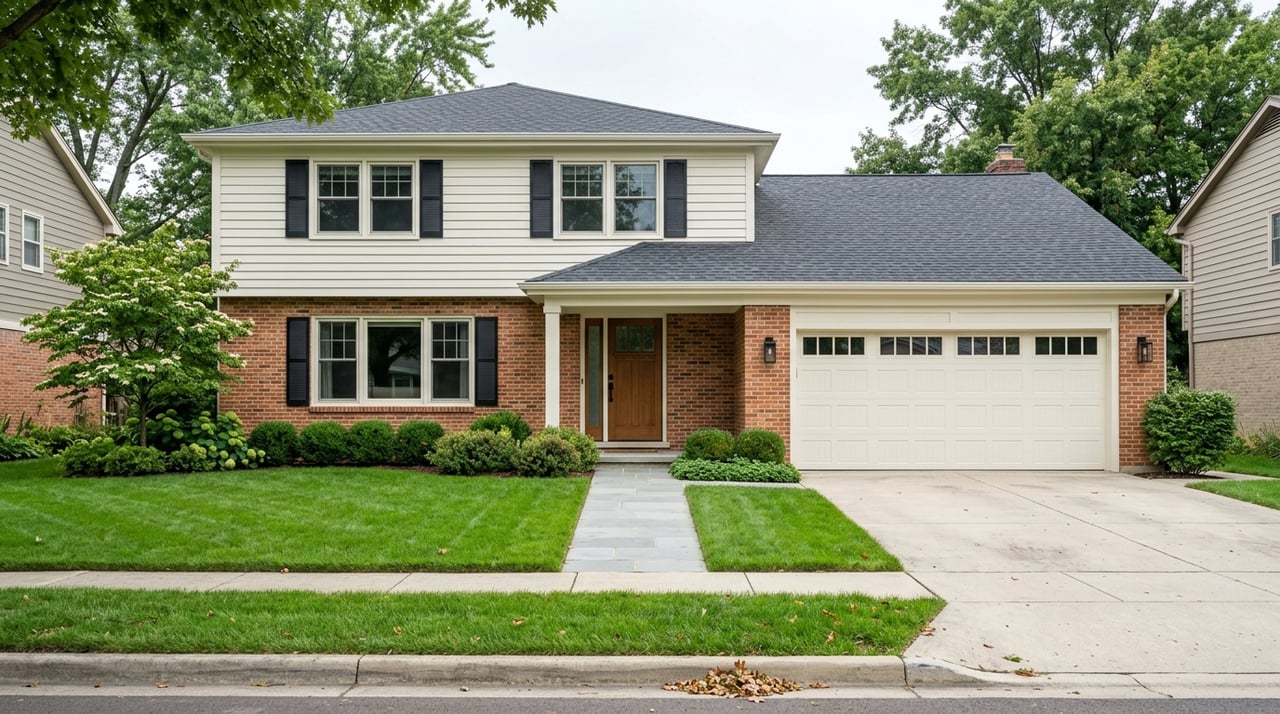
North Potomac Schools and Commute Insights for Families
April 2, 2026
April 2, 2026
If you want more space without giving up access to Rockville, Bethesda, or Washington, North Potomac often lands on the short list. It appeals to many buyers because it offers a more suburban feel while still connecting to major job centers and Montgomery County Public Schools. If you are weighing commute needs alongside school planning, this guide will help you understand how North Potomac works in real life. Let’s dive in.
North Potomac sits northwest of the City of Rockville in a roughly 6.5-square-mile area with more than 8,000 households and about 24,000 residents. That scale gives you a true suburban setting, with more residential pockets and fewer transit-oriented patterns than closer-in parts of Montgomery County.
County planning context helps explain that feel. Planning documents have long described North Potomac as more separated from transit and services than some other communities, which is one reason many buyers experience it as a drive-first location rather than a walk-to-Metro one. If you want a quieter suburban base and are comfortable with a car-centered routine, that can be a strong fit.
For commuters, the biggest thing to understand is simple: North Potomac does not have its own Metrorail station. In practice, most rail commuters look to Shady Grove, Rockville, or Bethesda on the Red Line, depending on where they live and where they need to go.
That does not make North Potomac inconvenient. It just means your daily routine is usually built around driving or taking a bus to rail access, rather than stepping out to a station in the neighborhood.
Shady Grove Station is a practical option for many buyers because WMATA notes that it is accessible from I-270 and MD-200. For people heading toward downtown Washington, it often serves as the most obvious park-and-ride style entry point into the system.
Rockville Station is another key hub. It is on the Red Line and also connects to MARC and Amtrak, which gives commuters more flexibility if their work patterns extend beyond a standard Metro trip.
Bethesda Station matters less as the first access point for most North Potomac residents, but it is still part of the same Red Line spine. If your destination is Bethesda, medical campuses, or nearby offices, it helps to think of North Potomac as connected by that broader corridor rather than by direct local transit.
If you want a non-driving link to Metro, MCDOT Ride On Route 56 is worth knowing. The route provides service from stops including Quince Orchard Road and MD 28, as well as Wootton Parkway and Hurley Avenue, to Rockville Metro Station.
That can be especially useful if you are comparing specific pockets of North Potomac and want to understand whether bus-to-Metro commuting is realistic for your household. In some areas, it may be a meaningful backup plan. In others, driving will still feel more efficient.
North Potomac is not one-note. Even within the community, the day-to-day feel can shift based on the road network, nearby school footprints, and how quickly you can reach major routes.
Areas around Travilah Road, Darnestown Road, River Road, and the larger school service areas often feel more wooded, lower-density, and more residential in character. Buyers drawn to these pockets often prioritize lot size, a quieter setting, and a traditional suburban layout.
If your lifestyle centers on home space, neighborhood routines, and a less connected transit pattern, these sections may appeal to you. The tradeoff is that the trip to rail access can feel more like part of the daily plan.
Areas closer to Quince Orchard Road, Wootton Parkway, Shady Grove Road, and Rockville access points tend to feel more commute-oriented. These locations can offer a little easier access to bus routes, Metro connections, and the larger I-270 travel pattern.
For buyers balancing office commutes with suburban living, this can be a smart middle ground. You still get the North Potomac setting, but your routes into Rockville and beyond may feel more straightforward.
If schools are high on your list, the most important takeaway is this: do not assume a school assignment based on neighborhood name or proximity. MCPS states that school assignments are based on boundary lines, not the nearest school, and its School Assignment Tool is the official way to verify an address.
That matters in North Potomac because buyers often hear shorthand about a “school pyramid,” but the correct assignment is always address-specific. Even homes that seem close together can have different assignments depending on the boundary map.
For many North Potomac buyers, the clearest current headline pyramid is the Wootton cluster map. In that map, the North Potomac-area elementary schools listed are Lakewood, Stone Mill, DuFief, and Travilah.
Those schools feed to Cabin John Middle School or Frost Middle School, and then Thomas S. Wootton High School. If you are beginning your search and want a starting framework, this is usually the most useful one to understand first.
School planning is not static. MCPS materials tied to prior boundary work showed examples of reassignment activity in nearby areas, including a project that would move students from Rachel Carson Elementary in the Quince Orchard cluster to DuFief Elementary in the Wootton cluster.
That does not mean every assignment is in flux. It does mean you should treat every school conversation as subject to the exact property address and current MCPS information.
This is also where North Potomac can get more nuanced. The neighboring Quince Orchard cluster map and related planning materials are a reminder that North Potomac-adjacent lines can involve schools such as Carson, Fields Road, Diamond, Jones Lane, Marshall, Brown Station, Quince Orchard, Ridgeview, and Lakelands Park.
For a relocation buyer, that means broad online descriptions are not enough. Once you narrow your home search, verifying the exact assignment should be part of your due diligence right away.
Commute and school planning matter, but so does everyday life. A useful local anchor is the Nancy H. Dacek North Potomac Community Recreation Center, which Montgomery County places next to Big Pines Local Park.
For many households, spaces like this help round out the appeal of the area. They support the community’s suburban rhythm and give you a better sense of what living here can feel like beyond the map.
North Potomac tends to work well if you want a suburban setting and are comfortable with a drive-or-bus-to-rail routine. It can also be a strong match if you are focused on specific MCPS assignments and are prepared to verify school boundaries at the address level before making a move.
In other words, this is not the place to choose based on assumptions. It is the place to choose when you want to match a home, a commute pattern, and verified school boundaries to the way your household actually lives.
If you are comparing North Potomac with Rockville, Kentlands, Darnestown, or nearby Montgomery County communities, working with a local guide can make the process much clearer. To talk through commute patterns, school-boundary verification, and the neighborhoods that best match your goals, connect with Valerie D Harnois.
Stay up to date on the latest real estate trends.

Let me share what I've learned about finding a dream home or selling your existing home on time. I will listen to you and work with you to create a realistic set of goals, formulate a marketing/staging strategy for selling your home, and then, most importantly, keep you informed every step of the way.